Table

‘Many folk like to know beforehand what is to be set on the table; but those who have laboured to prepare the feast like to keep their secret; for wonder makes the words of praise louder.’ J.R.R. Tolkien


Unless we’re in the furniture business or are currently renovating some physical space, we seldom think about tables. Yet they are the almost invisible instruments of many moments throughout our day. Indeed, throughout our lifetime.

Hence, we all have memories of tables—some good, some ill, some of being seated at a table, some of desiring desperately to gain a seat at one. Whether recollections of wonderment or wounding, tables are often at the center.

For some of us, the setting of our most cherished memories are communal tables: dinner with mom, dad, and siblings in the evening. With classmates or teammates in the halcyon days of young adulthood. With our spouse at that first date or wedding reception or anniversary celebration. With colleagues at the close of a deal. With children or grandchildren telling stories of days gone by. With old friends reunited after long years of sojourning apart. With loved ones after a memorial service and celebration of life.

But for many of us, our most painful memories share the same setting. Family meals full of conflict and abuse. A campus cafeteria that served up loneliness and rejection. Conference rooms dominated by division and divorce. Restaurant tables at which an absentee parent, an estranged child, a potential business connection, a promising date never showed up.

All that to say nothing of the excluded tables, the nonexistent tables, or the tables we so longed for access to yet never received invitation.

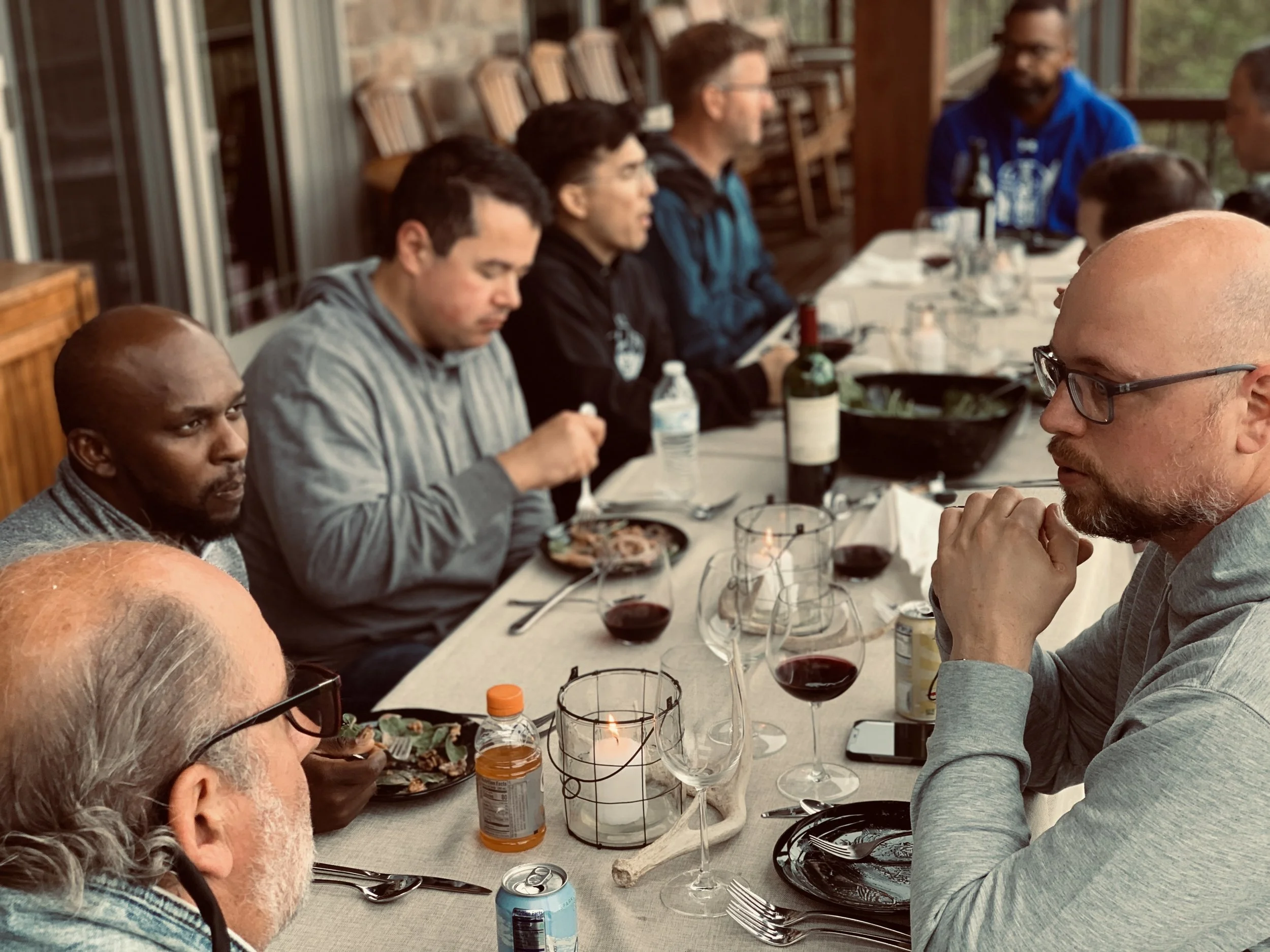
Tables, it seems, are more than a furnishing—they are a focal point of our lived experience. They are where we have felt most accepted and seen, and where we have felt most isolated and invisible. Sometimes, they are where a family’s or a society’s most heart-wrenching battles are fought.

Why is that? How can it be that something we so often take for granted is the actual locus of our deepest, most profound experiences?

Let’s look to the word itself.

Our English word table comes to us from a Germanic root via Old English, and similarly Old French, originally meaning ‘a board or plank’. Simple enough to grasp: take a plank or two, set them on some legs, and voilà…a table. Nothing particularly revelatory, nor any surprising discovery explaining the profound importance of these artifacts in our lives.

Until we dig deeper.

Underlying the Germanic origin was the Latin tabula, which, while also meaning literally a board or plank, implied a small one, and specifically one used for writing. As a reader of Descartes or Locke will recognize, the phrase tabula rasa meant not ‘an empty table’, but ‘a blank slate’, as in the human mind as it enters a new life or experience and is formed as the outside world is impressed upon it.

This begins to reveal the importance of tables in our life, and especially the memories our mind makes (or mythologizes). At the tabula rasa of the table is where much of our narrative is written, where much of the substance of our story is first penned and printed for posterity.

Whether warm, aromatic meals preceded by ‘Dinner’s ready!’ and celebratory feasts bringing together disparate friend groups or new family members with laughter and joy, or obligatory, strife-filled mealtimes and long, lonesome stretches of saddened suppers, the unexpected delights and the unmet desires spill from the tops of tables into the deep places of our hearts and minds.

And it is at a new table that a good Father is waiting to water the former and heal the latter in the lives of his sons.

How can we be sure, when many of us have only known emotionally absent or abusive father figures waiting for us at the physical tables of our lives? Because He has a long record of spreading out safe, sumptuous tables for the sons who have gone before us.

In the beginning, all the world was a continual sensory feast for the first son, with not only raw hunger attended to, but beauty and goodness in every sight, sound, touch, and relationship. And ever since, after our forebears left that table of fellowship and the thorns and threats of mortality and malice were given sway over immortal, abundant life, this Father has been present and purposeful in spreading out tables for his sons in the midst of the valleys and canyons we must traverse.

No desert is too dry for His bread of life, no fear and depression too dark for His provision, no disappointment too deep for His preparation, no location too remote for a miraculous, multi-course meal.

No failure or betrayal too great for reunion and redemption at the table of fellowship.

And to what end? Solely for our healing and wholeness? No, because no cup overflows for its own sake; no well-watered garden is for its own edification only.

He invites His sons to feast with him at the table so that in their joy and contentment others—through them—will be invited to the table. So that many others along the highways and byways will gain access to the safety and succor that the Father’s table provides.

Indeed, this providential purpose, this Spirit-filled mission is baked into the word itself. In the Hebrew tongue of the psalmist—who perceived that the eyes of his heart were not meant to lock onto the greener pastures and cooler waters on the other side of the valley, but rather onto ‘the table prepared’ in the midst of the shadowy threats—the term meant more than a place of invitation and gathering. It emerged from an ancient root word meaning ‘to stretch out’, and more specifically, ‘to send’.

This is the fullness of sonship. Not merely invited and celebrated at the table of gathering, but also anointed and sent out with unique purpose and protection, to participate in the peacemaking and redemptive reconstruction of the Son. All with a place reserved to return, recline, and recount the joys and discoveries along the way.

Seen, celebrated, and sent. That’s the prix fixe menu on offer at the table of sonship. We need only come in from the fields and receive.

When evening came, he was reclining at the table with the Twelve. Matthew 26:20

Previous
Previous

Virtue

Next
Next

Surrender